


News
06.07.2026 Possible new Paraiba discovery in Ethiopia: SSEF reports significant development in the gemstone market
In a recent press release, the Swiss Gemmological Institute SSEF reported credible evidence of a new deposit of copper-bearing tourmalines in Ethiopia. If the find is confirmed, it could open a new chapter in the history of one of the world’s most sought-after colored gemstones: the Paraiba tourmaline.
Since their discovery in the late 1980s, Paraiba tourmalines have been among the most extraordinary and sought-after colored gemstones in the world. Their intense blue to blue-green color, often described as ‘neon’ or ‘electric,’ is primarily caused by copper within the tourmaline’s crystal structure. This spectacular variety was originally discovered near São José da Batalha in the Brazilian state of Paraíba. Later, additional well-known sources were found in Nigeria and Mozambique.
On June 18, 2026, the SSEF in Basel published a press release that was also distributed as a newsletter. In it, the institute reports ‘credible reports from trade sources’ indicating that a new deposit of copper-bearing tourmalines may have been discovered in Ethiopia. At the same time, several Paraiba tourmalines were submitted to the SSEF for testing, whose geographic origin was difficult or impossible to determine conclusively using existing analytical criteria and algorithms. According to preliminary data, some of these stones could originate from the newly reported Ethiopian deposit.


What is particularly interesting, according to the SSEF, is that initial trace element analyses show a significant overlap with already known areas of origin – especially with Brazilian material. This makes origin determination challenging for certain specimens and underscores the importance of modern gemmological analytical techniques. The SSEF announced that it will continue to characterize the potential new material and further develop methods for distinguishing Paraiba tourmalines from different origins.
For collectors, investors, and lovers of high-quality colored gemstones, this news is relevant for several reasons. Due to their rarity, exceptional color intensity, and limited deposits, Paraiba tourmalines are among the most valuable tourmalines on the market. Origin plays a major role here: stones from Brazil often command significant premiums over African material due to their historical significance, rarity, and market position. At the same time, Mozambique in particular has taken on a central role in recent years as a supplier of larger, gemmologically high-quality copper-bearing tourmalines.
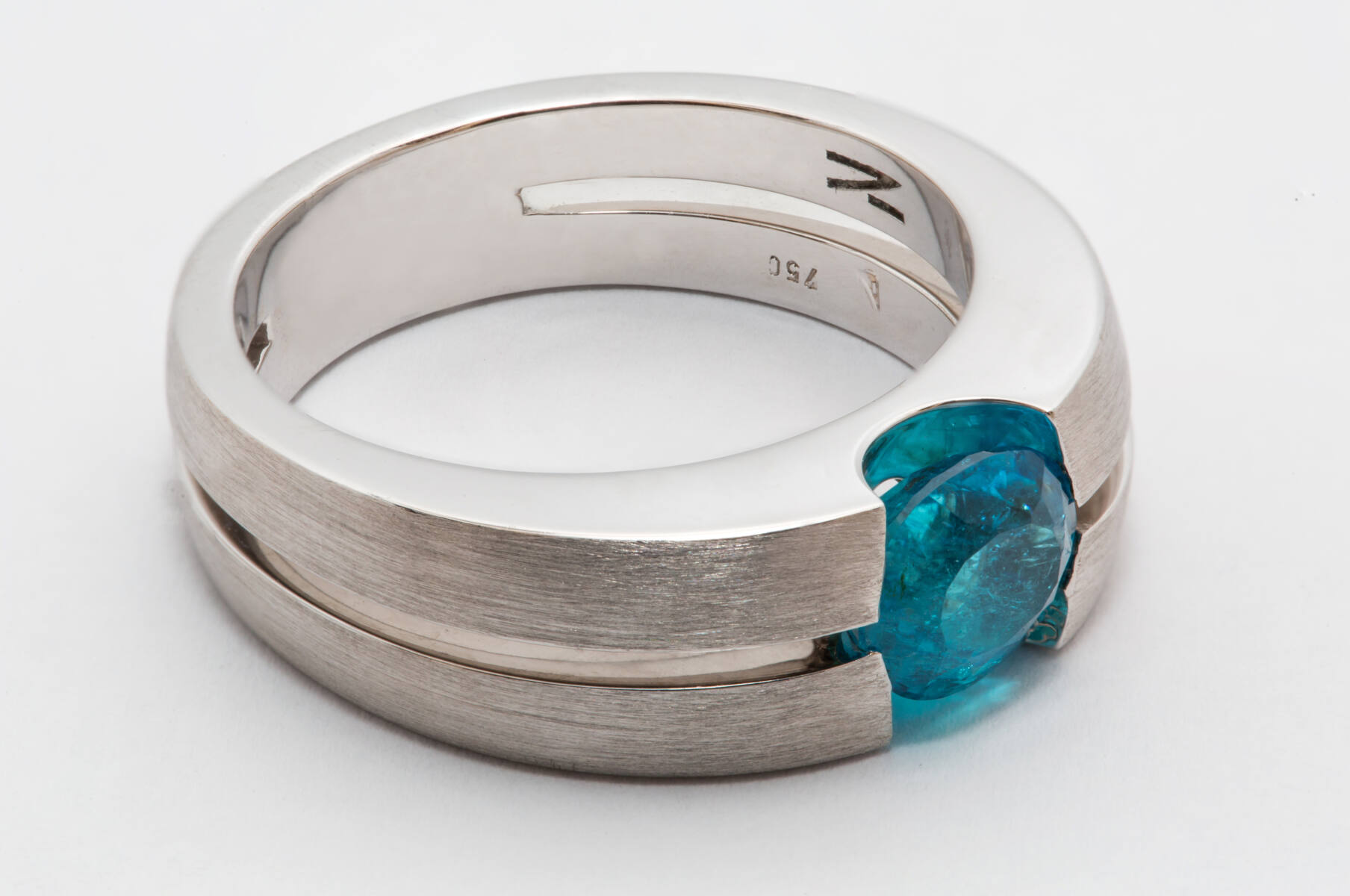
Despite the great attention, caution is advised. So far, this is not a comprehensively scientifically documented and published new origin, but rather a highly gemmologically relevant report based on credible trade reports, submitted stones, and preliminary analyses. Furthermore, no verified, published specialist information is currently available regarding exact mining areas. The Italian Gemological Review also points out that further studies and a comprehensive chemical characterization are required before Ethiopia can be considered a newly documented Paraiba origin.
It is precisely this uncertainty that shows how crucial independent laboratory reports are for high-quality colored gemstones. When it comes to Paraiba tourmalines, it is not just about color and beauty, but also about chemical composition, potential treatments, origin, and documentation. In its research on origin determination, the GIA emphasizes that standard testing and simple qualitative analyses are often insufficient for Paraiba tourmalines; instead, quantitative trace element analyses are required to reliably differentiate between origins like Brazil, Nigeria, and Mozambique.
For the market, the news from Ethiopia therefore means one thing above all for now: attention, a need for research, and new questions. If Ethiopia is indeed confirmed as a new source of high-quality copper-bearing tourmalines, it would be one of the most exciting developments in the colored gemstone sector since the African discoveries in Nigeria and Mozambique. However, only time will tell whether and to what extent this will result in a stable market with consistent qualities.
For The Natural Gem, the core standard remains unchanged: the decisive factors are verified quality, transparent documentation, and the assessment of each individual gemstone. Especially with rare stones like Paraiba tourmalines, the rule stands: color, clarity, cut, treatment, origin, and an up-to-date certificate from a renowned gemmological laboratory are the foundation of any sound valuation.
Conclusion
The SSEF report on a potential new Paraiba source in Ethiopia is significant news for the international gemstone world. It shows that new chapters can still be written even for the rarest colored gemstones – and that scientific analysis, experience, and transparency are more important than ever.

Dr. Thomas Schröck
The founder and managing partner of THE NATURAL GEM has been active in international gemstone trading for 30 years. As a doctor of economics and a certified gemmologist in Switzerland, Germany and the USA, among other countries, he is one of Europe’s leading experts on naturally-coloured, untreated gemstones and investments in them.

